


Heel Pain (Plantar Fasciitis or Plantar Heel Pain) Relief thru Stretching
Click Here for the updated
version of this article.
Heel pain is something that millions of people suffer from every year. The causes are simple. Feet get a lot of abuse. The repeated pounding from running or jogging, the pressure of a job that keeps you on your feet, or simply walking around in ill-fitting shoes can all contribute to heel pain.
The most common cause of heel pain happens when stress is placed on the plantar fascia ligament. The fascia is like a rubber band that stretches between your heel and your toes. When it's stretched irregularly, small tears and inflammation can result. If left untreated, the condition known as plantar fasciitis (plantar heel pain) can get very painful, very quickly. Symptoms can include an aching, burning or stabbing pain that strikes the bottom of the heel.
Risk factors for plantar fasciitis include those who have excessive pronation (their feet roll inward too much when they walk), the overweight, people with excessively high arches and those with flat feet. You're also at risk if you stand, walk or run on hard surfaces, if you've got a tight Achilles tendon, tight calf muscles or you've experienced sudden weight gain.
If you're dealing with heel pain, some things have been shown to help reduce or even eliminate the pain. Stretching exercises can help the ligament become more flexible. Strengthening exercises help build support for the arch and reduce stress on the ligament. Here are some specific suggestions.
This may seem obvious, but don't do anything that makes the pain worse. You might just need to take some time off and rest. It's better to spend a few days recuperating rather than weeks or months laid up from a serious injury.
Check your shoes. Make sure they fit correctly and that your arches are properly supported. Ask a podiatrist to analyze your feet and the way you walk. Then they'll be able to recommend specific brands and models of shoes that'll give you the most support.
Reduce the impact on your feet by avoiding any runs on concrete. Look for running tracks or level grass. If you stand in one place, get a shock-absorbing mat.
Plantar fasciitis pain is often more intense first thing in the morning. The plantar fascia tends to tighten while we sleep. To get some relief, flex your foot up and down 8 to 10 times before getting out of bed. Then, periodically throughout the day, use the following instructions to stretch your Achilles tendon, arches and hamstrings.
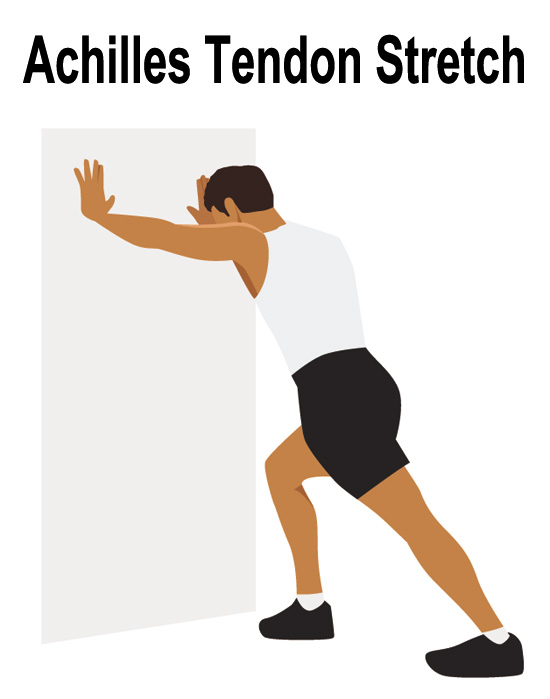
Achilles Tendon Stretch: Stand facing a wall, placing one foot with toes against the wall and stepping back with the other. Keep both feet flat on the floor; lean forward by bending the knee of the forward foot while keeping the back leg straight. Hold the stretch for 10 to 20 seconds and repeat with the opposite foot. Perform this stretch multiple times daily.
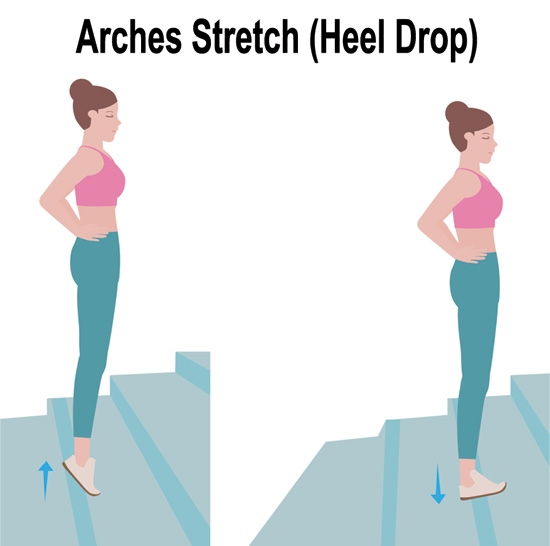
Arches Stretch (Heel Drop) on Stairs: Step onto a stair and rest on the balls of your feet. Lower your heels until you feel a stretch in your arches and hold for 5 to 10 seconds. Repeat at least five times, holding onto a handrail for balance. For greater range of motion remove your shoes and socks.
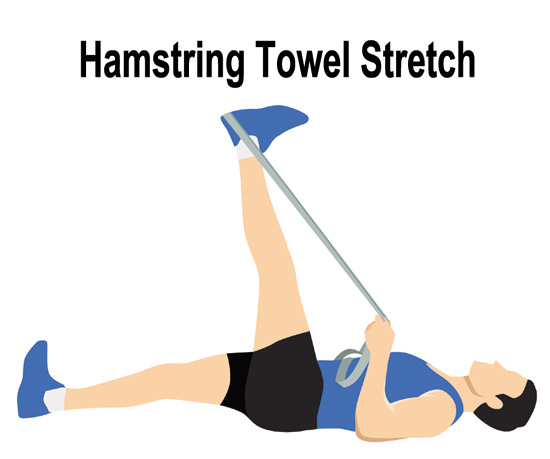
Hamstring Towel Stretch: Lay on the floor with your legs extended and your back straight. Place a towel or band under the ball of your foot and hold each end of the towel in your hands. Gently pull the towel towards you, lifting your leg until you feel a stretch along the back of your thigh. Keep your knee straight but not locked, and hold the stretch for 10 to 20 seconds. Release and lower your leg back down. Repeat this stretch 3 to 4 times for each leg, ensuring you maintain a smooth, controlled motion without bouncing.
For those already experiencing plantar heel pain, cold therapy is an effective method to reduce inflammation. Rolling a frozen water bottle for five to fifteen minutes under the arch of the affected foot can provide relief by relaxing the muscles and applying soothing cold to the inflamed area.
Call for a FREE Consultation (305) 296-3434
CAUTION: Check with your doctor before
beginning any diet or exercise program.
5/17/2009
Updated 6/15/2024


