


Rise and Align: Your Guide to Better Posture
Are you hunched over your phone or computer, with your neck craned forward and your shoulders rounded? Maybe you catch a glimpse in the mirror and notice you look like you’re carrying a permanent backpack. You’re not alone. Many young and old spend their days slouched over devices, steering wheels, or desks.
But here’s the thing: that forward head posture and rounded upper back don’t just change how you look. Poor posture can bring nagging aches, limit your movement, and leave you feeling less confident. If you’re older, that slumped stance can also increase the risk of falling because your center of gravity shifts.
What’s Going On
When your head juts forward, you strain the muscles in your neck and upper back. If your shoulders roll forward, it forces your spine to round. Over time, this posture can lead to tightness in your chest muscles, weakness in your back muscles, and even tension headaches.
Research supports the idea that a strong, well-aligned core can help reduce pain and improve function. For example, a 2017 study in the Pakistan Journal of Medical Sciences by Akhtar and colleagues found that core stabilization exercises reduced chronic non-specific low back pain more effectively than routine exercise programs. Although the study focused on lower back issues, the central message applies widely: strong, stable muscles around your spine can ease discomfort and help correct poor posture.
Exercises to Help You Straighten Up
Below are simple moves you can do at home. If you have any medical conditions, talk to your doctor or physical therapist first.
1. Chin Tuck
How to Do It: Stand up. Gently pull your chin straight back, like you’re making a double chin. Keep your shoulders relaxed. Hold for a slow count of three, then release.
Why It Helps: It targets deep neck muscles that get overstretched when your head juts forward.

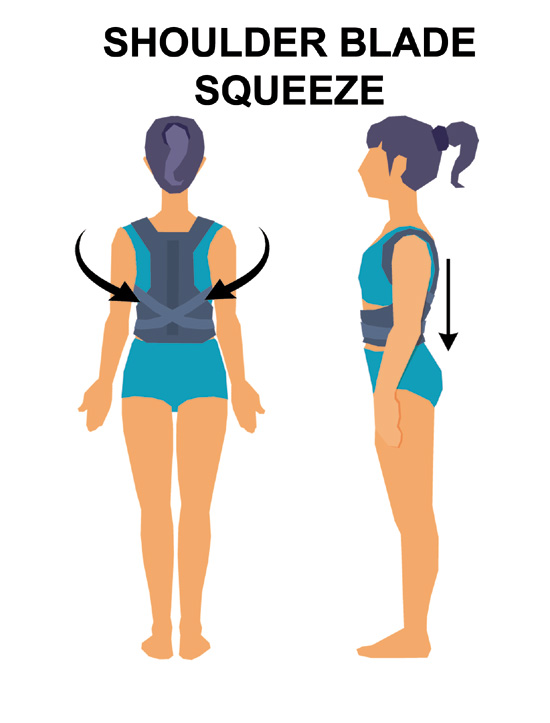
2. Shoulder Blade Squeeze
How to Do It: Stand or sit with your arms at your sides. Brace your core. Gently pull your shoulder blades back and down, like you’re tucking them into your back pockets. Hold for three to five seconds. Repeat 8–10 times.
Why It Helps: This counters the usual slump. Strengthening the muscles around your scapula helps you keep a more upright stance.
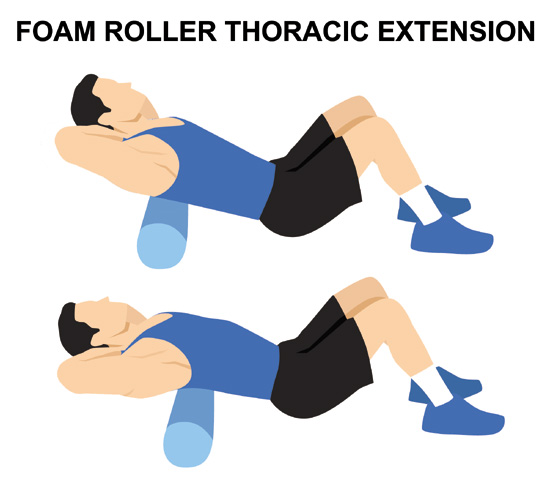
3. Foam Roller Thoracic Extension
How to Do It: Lie on a foam roller so it’s under your upper back, with your feet flat on the ground. Support your head with your hands. Slowly arch backward over the roller, then return to neutral. Shift the roller up or down slightly to target different sections of your upper back.
Why It Helps: It loosens the mid-spine (thoracic region), which often becomes stiff from hunching. Older adults especially benefit from more mobility here.
4. Wall Angels
How to Do It: Stand against a wall with your heels, lower back, and head touching if possible. Lift your arms to your sides like a “W.” Slowly slide your arms overhead into a “Y,” keeping contact with the wall. Then return to the “W.”
Why It Helps: It activates the muscles that stabilize your shoulders and upper back, encouraging better alignment.

Putting It All Together
You don’t need hours in the gym to see results. Aim for 5–10 minutes of these exercises each day. If you’re older or new to exercise, start slowly, try a few reps of each move and build up from there. You could do them in the morning, before bed, or even during a TV commercial break. Small doses done consistently work better than doing a marathon session once in a blue moon.
Long-Term Benefits
By training your core and upper back muscles, you can reduce the daily aches that come from a hunched posture. Older adults have better balance and a lower risk of falls when their spine is more stable. For younger folks, fixing posture issues now can help prevent bigger complications later. You’ll also find you carry yourself more confidently, whether in a business meeting or running errands.
Reference Links:
Effectiveness of core stabilization exercises and routine exercise therapy in management of pain in chronic non-specific low back pain: A randomized controlled clinical trial
Muhammad Waseem Akhtar, Hossein Karimi, Syed Amir Gilani
Pakistan Journal of Medical Sciences, Published 2017 Jul-Aug;33(4):1002–1006. doi: 10.12669/pjms.334.12664
Click Here for the Study: https://pmc.ncbi.nlm.nih.gov/articles/PMC5648929/
Call for a FREE Consultation (305) 296-3434
CAUTION: Check with your doctor before
beginning any diet or exercise program.
1/19/2025


