


You Cannot Exercise Your Way Out of a Bad Diet
Food Choices Matter Most for Shedding Pounds
If your weight keeps going up, check your plate first, not your step count. New research shows that what you eat matters way more than how much you move when it comes to weight loss.
Exercise is fantastic for your heart, brain, muscles, and overall well-being, promoting a longer life. It also helps you keep weight off after you’ve lost it. But for losing weight in the first place? You need to do a lot more than most people can handle.
Scientists studied over 4,000 adults from 34 different groups around the world. They found something surprising: people in rich countries don’t actually burn fewer calories than hunter-gatherers who walk and work all day.
After accounting for body size, people in developed countries only burn about 6 to 11 percent fewer calories. That small difference explains just a tiny part of why obesity rates are higher in wealthy places.
Your body tries to keep your daily calorie burn pretty steady. When you exercise more, your body often compensates by making you hungrier or less active at other times. But this varies from person to person.
Here’s the real reason exercise alone doesn’t work well for weight loss. It’s a numbers game. Walking for 30 minutes burns about 100-150 calories for most people. One can of soda has 140 calories. Skipping that soda is a much faster and easier way to drop the pounds.
To lose meaningful weight from exercise alone, you need to burn at least 400-500 calories per workout, five or more days per week. That means 90 minutes of brisk walking or 30 minutes of running every single day. Most people quit long before reaching those levels.
The real difference is what people eat, not how much they move. To achieve weight loss results, focus on your food first, then incorporate exercise for overall health. Here are the steps.
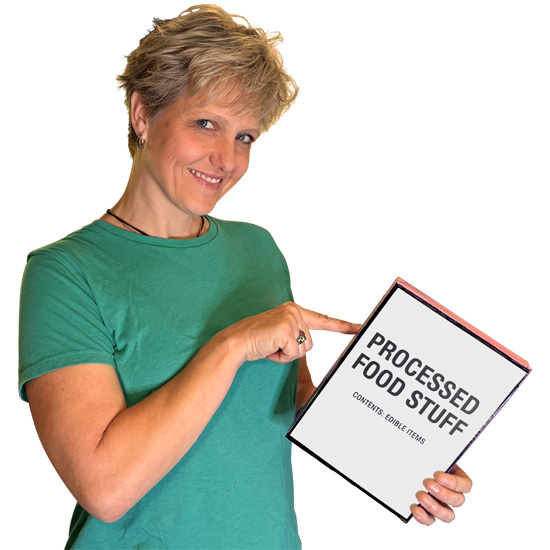
Track processed foods for one week. Write down everything you eat that has lots of ingredients you can’t pronounce. Look for things like artificial flavors, colors, and preservatives. Most people eat way more of these foods than they realize.
Swap one meal a day for simple foods. Try eggs, plain yogurt, oats, beans, fish, chicken, potatoes, rice, fruits, vegetables, or nuts. In one study, people ate 508 extra calories per day when researchers gave them processed foods instead of simple foods, even though both meal plans had the same nutrients.
Use the plate rule: half vegetables, quarter protein, quarter starch. Fill half your plate with vegetables first. Then add your protein source. Shoot for at least 20-40 grams of protein per meal. Finish with starchy foods, like rice, potatoes, or bread. This often works better than counting calories.
Aim for 25-38 grams of fiber daily. Most Americans only get half this amount. Add fiber slowly to avoid stomach problems. Get it from fruits, vegetables, beans, and whole grains.
Eat at least 0.5-0.7 grams of protein per pound of body weight. For a 150-pound person, that’s a minimum of 75-105 grams daily. Spread this across your meals. Active individuals and older adults require more; consult a nutritionist to determine what’s appropriate for you.
Cut out sugary drinks. Stick to water, unsweetened tea, black coffee, or sparkling water. Evidence links sugar-sweetened beverages to weight gain. Plus, liquid calories don’t make you feel full like solid food does.
Exercise 150-300 minutes per week for health. Go over 250 minutes for weight loss, plus two strength workouts. A recent study of 116 trials found that exercise alone leads to modest weight loss, with better results above 150 minutes weekly. But you need over 4 hours per week for meaningful weight loss from exercise alone.
Exercise is crucial for maintaining your health and supporting weight loss. Keep doing it. But to lose weight, your food choices matter more. Start with what you eat, then keep exercising for all the other benefits.
Safety Notes
Pregnant and nursing women need different advice.
If you take blood pressure or diabetes medications, weight loss might mean you need different doses. Talk to your doctor.
The GLP-1 Revolution and a New Problem
Weight-loss medications like semaglutide and tirzepatide are transforming obesity care, helping millions drop serious weight. These drugs, known as GLP-1 receptor agonists, lower appetite and blood sugar dramatically. But they also suppress hunger-driven movement. When people lose weight without exercise, they risk trading fat for muscle.
Clinical studies show that up to one-third of the weight lost on GLP-1 drugs can come from lean mass. That means a smaller, weaker body with a slower metabolism, raising the risk of rebound gain when the drug stops.
Muscle loss also means poorer balance, less functional strength, and more fatigue. Without resistance training, the new weight won’t be healthy weight.
If you're on GLP-1's, start resistance training before or when you start the drug. Keep protein up. Track strength, not just the weight on the scale. Continue training when tapering or stopping the GLP-1 drugs.
Reference Links:
Energy expenditure and obesity across the economic spectrum
Amanda McGrosky, Amy Luke, Leonore Arab and The IAEA DLW Database Consortium
Proceedings of the National Academy of Sciences | Research Article | Anthropology, Published July 14, 2025
Click Here for the Study: https://www.pnas.org/doi/full/10.1073/pnas.2420902122
Role of Physical Activity for Weight Loss and Weight Maintenance
Carla E Cox
American Diabetes Association - Diabetes spectrum, Published 2017 Aug;30
Click Here for the Study: https://pmc.ncbi.nlm.nih.gov/articles/PMC5556592/
Ultra-processed foods cause weight gain and increased energy intake associated with reduced chewing frequency: A randomized, open-label, crossover study
Shoko Hamano, Mika Sawada, Masakazu Aihara, Yoshitaka Sakurai, Rie Sekine, Satoshi Usami, Naoto Kubota, Toshimasa Yamauchi
Diabetes, Obesity & Metabolism, Published 06 June 2017
Click Here for the Study: https://dom-pubs.pericles-prod.literatumonline.com/doi/10.1111/dom.15922
Effect of ultra-processed food consumption on male reproductive and metabolic health
Jessica M. Preston, Jo Iversen, Antonia Hufnagel, Line Hjort, Jodie Taylor, Clara Sanchez, Victoria George, Ann N. Hansen, Lars Ängquist, Susan Hermann, Jeffrey M. Craig, Signe Torekov, Christian Lindh, Karin S. Hougaard, Marcelo A. Nóbrega, Stephen J. Simpson, Romain Barrès
ScienceDirect Cell Metabolism, Published 28 August 2025
Click Here for the Study: https://doi.org/10.1016/j.cmet.2025.08.004
Ultraprocessed or minimally processed diets following healthy dietary guidelines on weight and cardiometabolic health: a randomized, crossover trial
Samuel J. Dicken, Friedrich C. Jassil, Adrian Brown, Monika Kalis, Chloe Stanley, Chaniqua Ranson, Tapiwa Ruwona, Sulmaaz Qamar, Caroline Buck, Ritwika Mallik, Nausheen Hamid, Jonathan M. Bird, Alanna Brown, Benjamin Norton, Claudia A. M. Gandini Wheeler-Kingshott, Mark Hamer, Chris van Tulleken, Kevin D. Hall, Abigail Fisher, Janine Makaronidis & Rachel L. Batterham
Nature Medicine, Published 04 August 2025
Click Here for the Study: https://www.nature.com/articles/s41591-025-03842-0
Aerobic Exercise and Weight Loss in Adults A Systematic Review and Dose-Response Meta-Analysis
Ahmad Jayedi, Sepideh Soltani, Alireza Emadi, Mahdieh-Sadat Zargar, Ali Najafi
JAMA Network Open, Published December 26, 2024
Click Here for the Study: https://jamanetwork.com/journals/jamanetworkopen/fullarticle/2828487
Appropriate Physical Activity Intervention Strategies for Weight Loss and Prevention of Weight Regain for Adults
DONNELLY, JOSEPH E. Ed.D (Chair); BLAIR, STEVEN N. PED; JAKICIC, JOHN M. Ph.D.; MANORE, MELINDA M. Ph.D., R.D.; RANKIN, JANET W. Ph.D.; SMITH, BRYAN K. Ph.D.
ACSM Medicine & Science in Sports & Exercise, Published February 2009
Click Here for the Study: https://journals.lww.com/acsm-msse/Fulltext/2009/02000/Appropriate_Physical_Activity_Intervention.26.aspx
Call for a FREE Consultation (305) 296-3434
CAUTION: Check with your doctor before
beginning any diet or exercise program.
9/22/2025
Updated 10/15/2025


