


Fasting Fables and Cancer:
Why Cancer Patients Need Food, Not Folklore
Fasting has been a hot topic lately, especially when it comes to its potential role in fighting cancer. You might have heard claims that fasting can help combat or even cure the disease. As someone who’s helped loved ones battle cancer, I understand why these ideas can sound appealing. But here’s the reality: while fasting has its benefits in specific contexts, it’s not the cure-all for cancer that some people make it out to be.
Recent research has started exploring fasting and fasting-mimicking diets as possible supportive strategies during cancer treatment. However, experts do not recommend fasting as a cure or replacement for standard therapies.
The notion that fasting might aid in cancer treatment stems from “in vitro” studies—research conducted in a lab, in petri dishes, not in people. In these studies, scientists deprived cancer cells of nutrients, and yes, the cells died. But here’s the thing: any cell in a petri dish will eventually die if you deprive it of food.
Animal and laboratory studies show fasting may help sensitize cancer cells to certain treatments. In human research, positive results are limited and inconsistent. Scientists only allow short-term fasting in specific clinical trials and always under medical supervision. For most cancer patients, the risks of malnutrition outweigh any potential benefits.
When you’re dealing with cancer, your body is under siege. It’s working overtime to fend off the invader and needs all the support it can get. Fasting, in this context, means cutting off vital supplies. You're depriving yourself of nutrients, energy, and fuel that your body desperately needs. Imagine a city trying to function during a blackout. Without power, everything grinds to a halt. That’s what happens when you fast during cancer treatment. You’re essentially pulling the plug on the power grid when your body needs it most.
You might lose weight, but it’s often the wrong kind of weight; muscle mass, which is crucial for recovery. Recent studies confirm that malnutrition, especially muscle loss, is associated with higher complication rates, longer hospital stays, and an increased risk of death during cancer treatment. Fasting can also weaken your immune system, making you more vulnerable to infections when you’re already at your most vulnerable.
Several studies have found that cancer patients who were malnourished experienced more complications and had lower survival rates. It’s a bit like trying to run a marathon on an empty stomach. Not only are you more likely to stumble, but you might not make it to the finish line at all.
You might be thinking, “But I’ve heard stories of people who fasted and saw their cancer shrink!” And yes, there are always stories out there. But anecdotes aren’t evidence. Every person’s body is different, and what worked for one might not work or even be harmful to another. Some small studies suggest that short-term fasting may help certain patients manage chemotherapy side effects. However, these approaches always require medical oversight and do not replace the need for proper nutrition.
Here’s what the experts recommend.
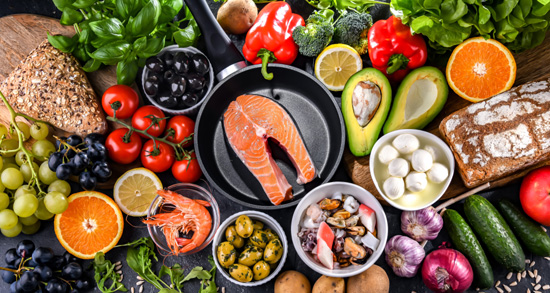
A balanced, nutrient-rich diet is essential for cancer patients, as it supports the immune system, helps maintain body weight, and can improve the effectiveness of treatments. Cancer organizations now advise against fasting or restrictive eating patterns for most patients. Only individuals enrolled in supervised clinical trials should attempt any form of fasting during treatment. The best bet for most people is to get enough calories, protein, and diverse nutrients.
Clinical research suggests that including a variety of fruits, vegetables, whole grains, lean proteins, and healthy fats in the diet is beneficial. Cruciferous vegetables like broccoli and kale, along with berries and leafy greens, provide antioxidants that protect cells and reduce inflammation. Whole grains such as quinoa and oats supply vital nutrients and help manage energy levels, while lean proteins from fish, poultry, and plant-based sources are crucial for muscle maintenance and immune support.
In addition to these food groups, healthy fats from nuts, seeds, and olive oil, as well as hydrating foods like watermelon and herbal teas, are recommended. Spices like turmeric and ginger, known for their anti-inflammatory and nausea-relieving properties, can also be beneficial.
While no single food can provide everything the body needs, focusing on a variety of nutrient-dense options tailored to individual needs can help cancer patients build strength and resilience during treatment. It’s essential to consult with healthcare providers before making significant dietary changes, as some foods or supplements may interact with treatments.
So, should you go on a fasting diet if you have cancer? The short answer is no, not without very careful medical supervision, and certainly not as a replacement for conventional treatment. Fasting might sound like a quick fix or a natural alternative, but cancer isn’t a condition that responds well to shortcuts.
Short-term or intermittent fasting remains experimental and is only safe for select patients under close supervision. Cancer professionals recommend focusing on nutrition, not quick dietary fixes.
Remember, your body is fighting a battle every single day. The last thing it needs is to be starved of the resources that could help it win. Feed your body, fuel your fight, and leave fasting for another time. One when you’re not facing one of life’s biggest challenges.
Reference Links:
Fasting during cancer treatment: a systematic review
U. Drexler, J. Dörfler, J. von Grundherr, N. Erickson, and J. Hübner
Quality of Life Research, Published online 2022 Nov 28. doi: 10.1007/s11136-022-03300-1
Click Here for the Study: https://ncbi.nlm.nih.gov/pmc/articles/PMC10123040/
Nutritional issues in patients with cancer
Duk Hwan Kim
Intestinal Research, Published online: October 14, 2019 DOI: https://doi.org/10.5217/ir.2019.00076
Click Here for the Study: https://www.irjournal.org/journal/view.php?doi=10.5217/ir.2019.00076
Nutritional status and interventions for patients with cancer – A systematic review
Marije E. Hamaker, Fleur Oosterlaan, Lieke H. van Huis, Noortje Thielen, Ariel Vondeling, Frederiek van den Bos
Journal of Geriatric Oncology, Published June 29, 2020DOI:https://doi.org/10.1016/j.jgo.2020.06.020
Click Here for the Study: https://www.geriatriconcology.net/article/S1879-4068(20)30147-8/abstract
Current Evidence and Directions for Intermittent Fasting During Cancer Chemotherapy
Kelsey Gabel, Kate Cares, Krista Varady, Vijayakrishna Gadi, and Lisa Tussing-Humphreys
Advances in Nutrition, Published online 2021 Nov 11. doi: 10.1093/advances/nmab132
Click Here for the Study: https://www.sciencedirect.com/science/article/pii/S2161831322000837?via=ihub
The impact of protein-energy malnutrition on clinical outcomes in hospitalized gastric cancer patients: A population-based analysis.
Rabia Iqbal, Henry Kimball, Mrunanjali Gaddam, Supriya Peshin, Samridhi Sinha, and Kalimullah Quadri
Journal of Clinical Oncology, Published January 27, 2025
Click Here for the Study: https://ascopubs.org/doi/10.1200/JCO.2025.43.4_suppl.503
Safety and feasibility of fasting in combination with platinum-based chemotherapy
Tanya B. Dorff, Susan Groshen, Agustin Garcia, Manali Shah, Denice Tsao-Wei, Huyen Pham, Chia-Wei Cheng, Sebastian Brandhorst, Pinchas Cohen, Min Wei, Valter Longo & David I. Quinn
BMC Cancer, Published 10 June 2016
Click Here for the Study: https://link.springer.com/article/10.1186/s12885-016-2370-6
The effects of short-term fasting on tolerance to (neo) adjuvant chemotherapy in HER2-negative breast cancer patients: a randomized pilot study
Stefanie de Groot, Maaike PG Vreeswijk, Marij JP Welters, Gido Gravesteijn, Jan JWA Boei, Anouk Jochems, Daniel Houtsma, Hein Putter, Jacobus JM van der Hoeven, Johan WR Nortier, Hanno Pijl & Judith R Kroep
BMC Cancer, Published 05 October 2015
Click Here for the Study: https://link.springer.com/article/10.1186/s12885-015-1663-5
The effects of intermittent fasting on anthropometric indices, glycemic profile, chemotherapy-related toxicity, and subjective perception in gynecological and breast cancer patients: a systematic review and meta-analysis
Xiaoxia Liu, Qiucen Meng, Wenqi Fan, Lianzhen Ning & Lina Ge
BMC Cancer, Published 07 March 2025
Click Here for the Study: https://bmccancer.biomedcentral.com/articles/10.1186/s12885-025-13806-9
Assessment of malnutrition in cancer patients: a geriatric approach with the mini nutritional assessment
Ozlem Dogan, Hayriye Sahinli, Dogan Yazilitas
Frontiers in Nutrition, Published 08 May 2025
Click Here for the Study: https://www.frontiersin.org/journals/nutrition/articles/10.3389/fnut.2025.1590137/full
Malnutrition Risk Is Associated With All-Cause Mortality and Chemotherapy Complications Among Adults Diagnosed With Diverse Cancer Types: A Retrospective Cohort Study
Rachel Hoobler, Manuela Herrera, Kary Woodruff, Alejandro Sanchez, Adriana M Coletta, Amandine Chaix, Joan Elizondo, Mary C Playdon
Journal of the Academy of Nutrition and Dietetics, Published Epub 2025 May 5.
Click Here for the Study: https://pubmed.ncbi.nlm.nih.gov/40334935/
Intermittent Fasting and Its Impact on Toxicities, Symptoms and Quality of Life in Patients on Active Cancer Treatment
Robert Li Sucholeiki, Casey L Propst, David S Hong, Goldy C George
Cancer Treatment Review, Published 2024 Mar 28;126:102725. doi: 10.1016/j.ctrv.2024.102725
Click Here for the Study: https://pmc.ncbi.nlm.nih.gov/articles/PMC11614448/
Call for a FREE Consultation (305) 296-3434
CAUTION: Check with your doctor before
beginning any diet or exercise program.
8/25/2024
Updated 9/5/25


